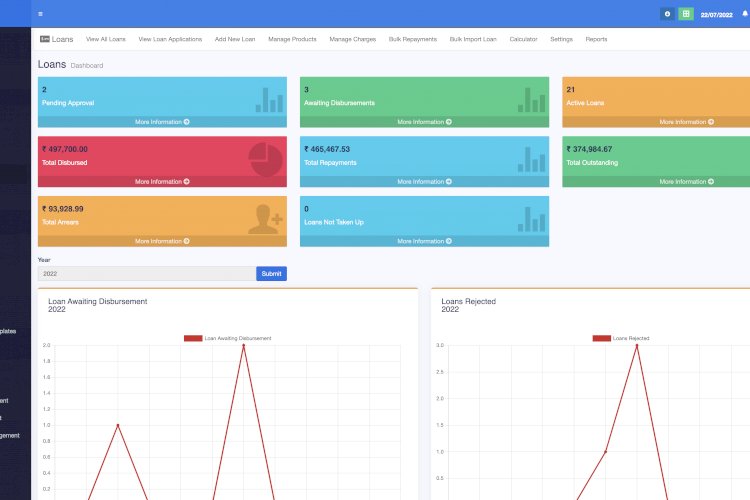
A loan management system helps a lender — a microfinance institution, SACCO, or small bank — keep track of borrowers, loans, repayments and savings in one place. Done well, it automates interest and charge calculations so staff spend less time on spreadsheets and make fewer costly mistakes.
Core features
- Borrower records with personal and financial details
- Configurable loan products: term, interest rate, repayment schedule
- Multiple interest-calculation methods (flat, reducing balance)
- Automatic charges and penalties
- Savings accounts alongside loans
- SMS notifications for due dates and confirmations
- Repayment tracking and collections
The maths that matters
The trickiest — and most educational — part is the amortization schedule: given a principal, interest rate and term, generate the row-by-row breakdown of how each repayment splits between interest and principal. Implementing both flat and reducing-balance methods teaches you why borrowers can pay very different totals for the “same” rate.
Technology stack
Commonly PHP with MySQL and a responsive HTML5 front end. An SMS gateway (with an HTTP API) handles notifications; you call it from the server whenever a repayment is logged or a due date approaches.
What you’ll learn
Financial calculations and rounding, schedule generation, integrating a third-party SMS API, and modelling the relationship between borrowers, loans, repayments and savings.
Frequently asked questions
Flat vs reducing-balance interest — which should I implement?
Implement both and let the loan product choose. Comparing them is one of the most instructive parts of the project.
How are SMS alerts sent?
Through an SMS gateway HTTP API: your server posts the phone number and message, and the gateway delivers it.
A note on using this project
This guide is written to help students and developers understand how a PHP/MySQL application like this is designed and built. Treat any sample code as a learning reference: read it, run it locally, and adapt it to your own requirements rather than shipping it unchanged. If you reuse third-party components, check their licences first.
Related projects and guides
Building or studying this system? These related write-ups on the site are worth a look:
- The Best Online Loan System — a related loan-management project walkthrough.
- Capstone Project Ideas with Source Code (2026) — more final-year project ideas in PHP, Laravel and MySQL.