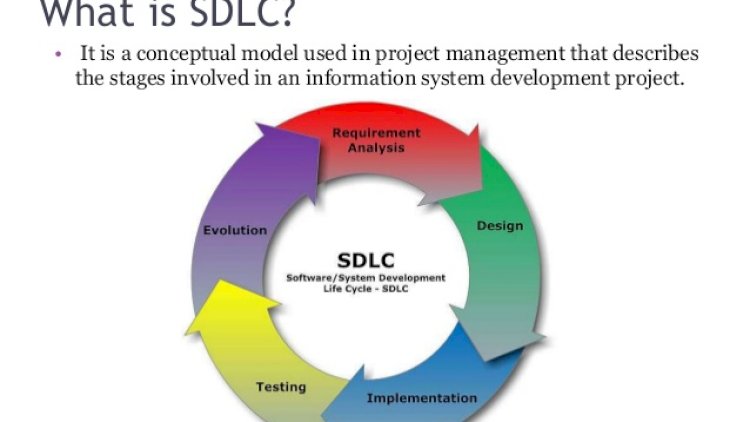
A software development life cycle (SDLC) model describes how a project moves from idea to shipped, maintained software. The model you pick determines when requirements get fixed, when testing happens, and how expensive a change is late in the project. Here are the models that actually get used, what each is good for, and how to choose.
1. Waterfall
Phases run strictly in sequence: requirements → design → implementation → testing → deployment → maintenance. Each phase finishes before the next begins, and each produces a signed-off document. Waterfall works when requirements are stable and well understood — regulated industries, fixed-scope contracts — and fails when requirements are discovered along the way, because changes late in the sequence are very expensive.
2. V-Model
A waterfall variant that pairs every development phase with a testing phase: requirements pair with acceptance tests, design with integration tests, coding with unit tests. Test planning starts early instead of being left to the end. Common in safety-critical software (automotive, medical) where verification must be traceable to requirements.
3. Iterative and Incremental
Build the system in repeated cycles, delivering a working slice each time. The first iteration might be a basic login and one core screen; later iterations add reporting, roles, and polish. Feedback from each slice corrects course for the next. This is how most student capstone and portfolio projects should be built — get a thin working version end to end, then grow it.
4. Spiral
Each loop of the spiral runs four quadrants: set objectives, analyze risks and build prototypes, develop and test, then plan the next loop. Its defining feature — the reason it exists — is explicit risk analysis at the start of every cycle, which the waterfall model lacks entirely. Spiral suits large, expensive projects where a wrong technical bet could sink the effort; it is overkill for small applications.
5. Agile (Scrum and Kanban)
Agile replaces long upfront phases with short timeboxed sprints (Scrum) or a continuous pull flow (Kanban). Requirements live in a prioritized backlog and are re-negotiated constantly; working software is demonstrated every sprint. Agile dominates commercial web and mobile development because requirements in those domains genuinely change. Its cost is that scope and end dates are harder to fix in advance.
6. Big Bang
No formal process: start coding, see what emerges. Legitimate only for throwaway prototypes and tiny experiments — but worth naming, because many failed projects were Big Bang projects that pretended otherwise.
Choosing a model
Ask two questions. How stable are the requirements? Stable favors waterfall/V-Model; volatile favors agile or iterative. How costly is failure? High-risk favors spiral or V-Model discipline; low-risk favors lightweight iteration. Real teams also combine models — agile sprints inside a contractual waterfall shell is common in practice.
If you are building a first project to practice these ideas, pick something with clear scope like our Online Voting Management System or the Equipment Inventory and Reporting System, and build it iteratively: one working feature per cycle.