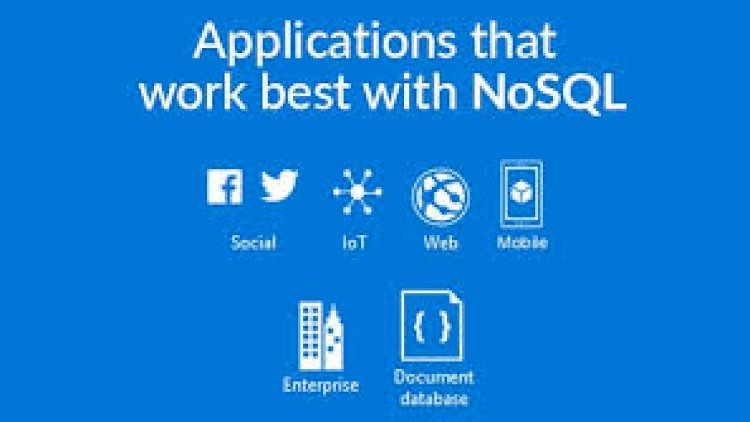
Non-relational databases (or NoSQL databases) store data without rigid tables – ideal for high-volume, high-velocity workloads. Below are 6 actual non-relational database use cases where NoSQL truly excels, and also a section about when a relational SQL database is still the better choice.
Non-relational databases don’t have the same rigid table structure as relational databases. In relational databases, we have rows and joins, while in non-relational databases we have documents, key-value pairs, wide columns, or graphs. It’s the design choice of using those structures that makes them useful in certain situations and not useful at all in others. Below are the applications where NoSQL truly earns its place, with reasoning behind each:
1. IoT telemetry
IoT deployments generate huge volumes of small timestamped readings from thousands of devices, and as firmware evolves the shape of that data changes. Document or wide-column stores (MongoDB and Cassandra) absorb schema drift without migrations and scale horizontally as more devices come online. Writes dominate reads, which suits log-structured NoSQL engines.
2. Mobile app back ends
Mobile apps ship new versions constantly, and each version may add fields to user profiles or activity records. Document databases let old record shapes coexist with new ones, so you do not block a release due to schema migration. Offline-first sync layers (Couchbase Mobile and Firebase) were built on this model.
3. Real-time analytics and event streams
Clickstreams, game telemetry and ad impressions arrive as high-velocity append-only events. Wide-column stores and key-value stores handle sustained write throughput that would require careful tuning on a relational system, and time-bucketed keys make recent-window queries cheap.
4. Product catalogs and content management
Product catalogs are the classic document store case: a laptop and a t-shirt share almost no attributes, so forcing them into one relational schema produces either sparse tables or an entity-attribute-value (EAV) design that is difficult to query. Using one document per product, with each product having its own attributes, simplifies building and reading the catalog.
5. Session storage and caching
Key-value stores such as Redis sit in front of the primary database to serve hot data – sessions, tokens, rendered fragments – in sub-millisecond time. This is the widest-spread application of any NoSQL technology – virtually every large PHP or Node application uses some form of key-value store, even if the underlying system of record stays relational.
6. Social graphs and recommendation systems
“Friends of friends who liked X” is a traversal question. Graph databases (Neo4j) answer these questions by walking relationships directly, while SQL would need recursive self-joins that degrade quickly with depth.
When not to use non-relational databases
If your data is naturally tabular, needs multi-row transactions, or feeds financial reports – then a relational database should remain the default. Most of the source code projects on this site – inventory, point of sale, enrollment systems – correctly use MySQL, as orders, stock counts and payments need ACID guarantees and joins. Non-relational databases complement relational systems – they rarely replace them outright.
Choosing the type fast
Document (MongoDB): flexible records, per-entity queries. Key-value (Redis and DynamoDB): caching, sessions, simple lookups at scale. Wide-column (Cassandra): write-heavy time series across multiple nodes. Graph (Neo4j): relationship-heavy traversals. Choose the access pattern to the data first – then choose the product.
To see the relational counterpart in practice, browse our PHP + MySQL projects such as the Stock Management System in PHP-OOP or the Retail Shop Management POS – both are examples of workloads where SQL is still the better tool.
Frequently asked questions
What are non-relational databases used for?
They shine where data volume is high and the shape of the data keeps changing: sensor and device telemetry, mobile app back ends, real-time analytics, product catalogs, caching, social feeds. Since they scale horizontally over multiple servers, they can handle write-heavy workloads that would crush a single-server setup.
Do non-relational databases use SQL?
Generally no — that is what NoSQL means. However, many offer familiar SQL-like ways to ask for data (e.g., Cassandra and Couchbase). But they generally avoid cross-table joins and strict multi-row transactions, trading off rigor for speed and easy scaling.
When should I pick a relational database instead?
Use relational when correctness matters more than raw scalability: banking and payments, inventory counts, bookings, reporting across related records. Many real systems will use both — relational for the money and non-relational for the fire hose of events.
What are some examples of non-relational databases?
A popular NoSQL database example is MongoDB, a document store you will find referenced in countless tutorials and job postings. The other names group by data model: key-value stores like Redis and Amazon DynamoDB, wide-column stores like Cassandra and HBase, and graph stores like Neo4j. Couchbase sits with the document stores alongside MongoDB. If you want to start learning non-relational databases with one example, begin with MongoDB — it runs on every major cloud, has a wealth of documentation, and is forgiving when your documents don’t fit a perfect schema.